CE, ISO & ATEX Certifications for Industrial Cleaning Equipment: What They Mean
Certifications on industrial cleaning equipment are more than marketing labels — they represent verified compliance with safety, quality, and regulatory standards that affect liability, market access, and operational safety. For procurement professionals, understanding what each certification covers, how it is obtained, and how to verify its validity is essential for making informed purchasing decisions. This guide explains the most important certifications for industrial cleaning equipment: CE marking, ISO 9001, ATEX, EAC, and other relevant standards.
CE Marking: European Safety Compliance
The CE (Conformité Européenne) marking indicates that a product complies with the relevant European Union health, safety, and environmental protection directives. For industrial cleaning equipment, several directives typically apply:
- Low Voltage Directive (LVD) 2014/35/EU: Covers electrical safety for equipment operating between 50–1,000V AC (75–1,500V DC). Requires protection against electrical shock, thermal hazards, and mechanical dangers from electrical causes.
- Electromagnetic Compatibility (EMC) Directive 2014/30/EU: Ensures the equipment does not emit electromagnetic interference that disrupts other devices and is itself immune to external interference.
- Machinery Directive 2006/42/EC: Covers mechanical safety — guarding, emergency stops, stability, and risk assessment. Applies to all powered cleaning equipment with moving parts.
- Pressure Equipment Directive (PED) 2014/68/EU: Applies to equipment operating above 0.5 bar internal pressure. Relevant for steam cleaners and pressure washers with pressurized boilers or vessels.
- ATEX Directive 2014/34/EU: Applies to equipment intended for use in explosive atmospheres (see ATEX section below).
The CE marking process involves a conformity assessment, technical documentation, and a Declaration of Conformity. For most cleaning equipment, the manufacturer can self-certify under the LVD, EMC, and Machinery directives. The PED and ATEX directives may require involvement of a Notified Body — an accredited third-party testing organization.
CE marking is mandatory for selling equipment in the EU and EEA markets. Equipment without valid CE marking cannot be legally placed on the European market and may be seized by customs.
ISO 9001: Quality Management System
ISO 9001 is the international standard for quality management systems (QMS). Unlike product-specific certifications, ISO 9001 certifies the manufacturer's processes — design control, supplier management, production quality control, calibration, corrective actions, and continuous improvement.
What ISO 9001 Covers
- Documented procedures for design, production, inspection, and delivery
- Supplier qualification and incoming material inspection
- Production process controls with defined acceptance criteria
- Calibration of measuring and test equipment
- Nonconformance management and root-cause corrective actions
- Internal audits and management review cycles
- Customer feedback and complaint handling processes
Why It Matters for Buyers
ISO 9001 certification provides confidence that the manufacturer has systematic quality controls rather than ad-hoc inspection. It does not guarantee that every individual unit is defect-free, but it does mean that defects are tracked, root causes are addressed, and processes are continuously improved. For B2B buyers, ISO 9001 certification is often a prerequisite for supplier qualification, especially in automotive, pharmaceutical, and aerospace supply chains.
Certification is issued by accredited certification bodies (such as TUV, SGS, BSI, or DNV) following a multi-stage audit process: document review, on-site facility audit, surveillance audits (annually), and recertification (every 3 years).
ATEX: Explosive Atmosphere Certification
ATEX certification is required for any equipment intended for use in environments where explosive atmospheres may occur — chemical plants, oil and gas facilities, paint shops, grain handling, mining, and pharmaceutical manufacturing. The certification is governed by EU Directive 2014/34/EU and applies to both electrical and non-electrical equipment.
ATEX Zones
| Zone | Atmosphere | Frequency | Equipment Category |
|---|---|---|---|
| Zone 0 | Gas/vapor | Continuous or long periods | Category 1 (very high protection) |
| Zone 1 | Gas/vapor | Likely in normal operation | Category 2 (high protection) |
| Zone 2 | Gas/vapor | Unlikely, short duration | Category 3 (normal protection) |
| Zone 20 | Dust | Continuous or long periods | Category 1 |
| Zone 21 | Dust | Likely in normal operation | Category 2 |
| Zone 22 | Dust | Unlikely, short duration | Category 3 |
Certification Process
ATEX certification for Category 1 and 2 equipment requires involvement of a Notified Body. The process includes:
- Design review against explosion protection standards (EN 1127-1, EN 13463, EN 60079 series)
- Type testing of the equipment — including ignition hazard assessment, surface temperature testing, and electrostatic evaluation
- Quality assurance assessment of the manufacturing process
- Issuance of an EU-Type Examination Certificate
- Marking with the ATEX symbol, equipment category, and ambient temperature range
Category 3 equipment (Zone 2/22) can be self-certified by the manufacturer with technical documentation, but many buyers still require third-party verification for liability reasons.
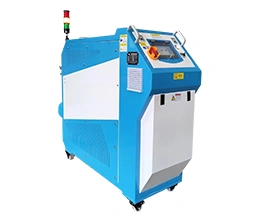
JIENENG's JNX-EX20 explosion-proof steam cleaner carries ATEX certification for Zone 1 (gas) and Zone 21 (dust), making it suitable for the most demanding hazardous environments including petrochemical plants and grain processing facilities.
EAC: Eurasian Economic Union Compliance
The EAC (Eurasian Conformity) marking is mandatory for equipment sold in Russia, Belarus, Kazakhstan, Armenia, and Kyrgyzstan — the member states of the Eurasian Economic Union (EAEU). The certification replaces the older GOST-R system and covers safety, electromagnetic compatibility, and for hazardous area equipment, explosion protection under TR CU 012/2011.
For industrial cleaning equipment, EAC certification typically involves:
- Safety testing to TR CU 004/2011 (Low Voltage) and TR CU 020/2011 (EMC)
- For explosion-proof equipment: TR CU 012/2011 (Equipment for Explosive Atmospheres) — the Eurasian equivalent of ATEX
- Factory audit by an accredited certification body in the EAEU
- Issuance of a certificate valid for 1–5 years depending on scheme
EAC certification is essential for any manufacturer exporting to the Russian-speaking markets. Without it, equipment cannot pass customs clearance in EAEU member states. JIENENG holds EAC explosion-proof certification alongside its ATEX certification, enabling dual-market compliance for hazardous area equipment.
Other Relevant Certifications
| Certification | Region/Purpose | Relevance to Cleaning Equipment |
|---|---|---|
| UL (Underwriters Laboratories) | North America | Electrical safety certification for US/Canada markets; often required by insurers |
| CSA (Canadian Standards) | Canada | Electrical and safety compliance for Canadian market |
| GB (Guobiao) | China | National standards compliance for Chinese market; mandatory CCC mark for certain product categories |
| RoHS | EU/Global | Restriction of hazardous substances in electrical and electronic equipment |
| REACH | EU | Registration, evaluation, and authorization of chemicals — relevant for cleaning agents and materials |
| FDA / EFSA | US/EU | Food-contact compliance for materials and surfaces in food-grade washers |
How to Verify Certifications
Certification claims should always be verified, not taken at face value. Fraudulent or expired certifications are common in international trade. Verification methods:
- CE: Request the Declaration of Conformity (DoC) with Notified Body number (4-digit code after CE). Verify the Notified Body is accredited at NANDO database (ec.europa.eu/growth/tools-databases/nando/)
- ISO 9001: Request the certificate with the certification body name and certificate number. Verify at the certification body's website or at IAF (International Accreditation Forum) CertSearch
- ATEX: Request the EU-Type Examination Certificate with the Notified Body number. Cross-reference with the NANDO database
- EAC: Request the EAC certificate with the accredited body reference number. Verify at the EAEU certification registry
- Ensure certificates are current — check issue and expiry dates
- Verify the certificate covers the specific product model, not just the manufacturer's facility
JIENENG Certification Portfolio
JIENENG maintains a comprehensive certification portfolio to serve global B2B markets:
- National High-Tech Enterprise — Chinese government recognition for R&D capability and innovation
- Specialized & New Enterprise (专精特新) — recognition of technical specialization, relevant for government procurement qualification
- ISO 9001:2015 — Quality management system, certified by accredited body
- ISO 14001:2015 — Environmental management system
- ISO 45001:2018 — Occupational health and safety management
- EU ATEX (2014/34/EU) — Explosion-proof certification for JNX-EX20 series
- EAC (TR CU 012/2011) — Eurasian explosion-proof certification
- Third-party整机检测报告 — Complete machine test report from accredited laboratory
- Italian AR pump authorization — Authorized distributor and integrator
Need Certified Equipment for Your Facility?
JIENENG industrial cleaning systems carry CE, ATEX, EAC, and ISO triple certifications. Whether you need explosion-proof equipment for a hazardous environment or ISO-certified quality for regulated supply chains, we have the documentation ready.
Request Certification DocumentsSummary
Certifications are the verified language of industrial compliance. CE marking confirms European safety compliance across multiple directives (LVD, EMC, Machinery, PED, ATEX). ISO 9001 confirms systematic quality management processes. ATEX certification confirms explosion protection for hazardous environments, with categories matched to zone classifications. EAC certification enables access to Eurasian markets. For procurement professionals, the critical step is not just checking that certifications exist but verifying their validity through official databases and ensuring they cover the specific product model being purchased. JIENENG's portfolio of national, international, and industry-specific certifications positions its equipment for deployment across regulated industries and global markets.