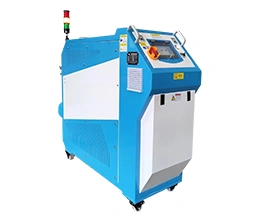
Crates, trays, and containers are the backbone of logistics, food processing, and manufacturing supply chains. Dirty crates contaminate products, spread bacteria, and create regulatory violations. Choosing the right crate washing machine ensures compliance, efficiency, and long-term cost savings. This guide covers selection criteria, features, and ROI.
Types of Crate Washing Machines
1. Tunnel-Type (Conveyor) Crate Washer
Crates travel on a conveyor through a washing tunnel with multiple spray zones: pre-wash, main wash, rinse, and optional drying. This is the highest-throughput option for continuous operation.
- Capacity: 200-1,000+ crates/hour
- Best for: High-volume operations (food processing, logistics hubs)
- Footprint: Large (5-15 meters)
- Price: $15,000-25,000+
2. Batch-Type Crate Washer
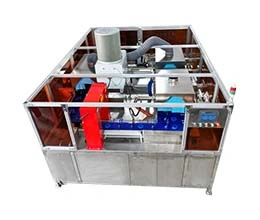
A single crate or small stack is loaded into a chamber, washed, and unloaded. Lower throughput but more flexible.
- Capacity: 50-200 crates/hour
- Best for: Small operations, variable crate sizes
- Footprint: Compact (2-4 square meters)
- Price: $5,000-12,000
3. Steam-Assisted Crate Washer
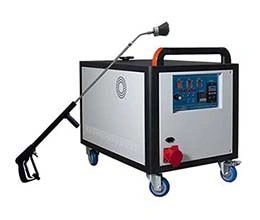
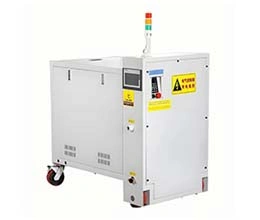
Combines steam injection with high-pressure water spray for superior cleaning and sanitization without chemicals. The JIENENG approach uses steam to dissolve grease and sanitize simultaneously.
- Capacity: 100-500 crates/hour
- Best for: Food processing, pharmaceutical, chemical containers
- Key advantage: Chemical-free sanitization, 80% less water
- Price: $10,000-20,000
Key Features to Evaluate
Washing Stages
| Stage | Temperature | Purpose | Required? |
|---|---|---|---|
| Pre-wash | 40-50°C | Remove loose debris, soil, large particles | Yes |
| Main wash | 60-80°C | Dissolve grease, oil, organic residue | Yes |
| Rinse | 50-60°C | Remove wash water and detergent residue | Yes |
| Sanitizing rinse | 82°C+ | Thermal sanitization (food grade) | Food applications |
| Drying | Ambient-70°C | Remove water for immediate use | Optional but recommended |
Water Recycling System
Modern crate washers filter and recirculate wash water, reducing fresh water consumption by 50-80%. Look for:
- Multi-stage filtration (coarse screen, fine filter, bag filter)
- Oil skimmer for removing floating grease
- Automatic backflush for self-cleaning filters
- Tank capacity: 200-1,000 liters depending on throughput
Conveyor and Loading System
- Belt type: Stainless steel mesh (food grade) or plastic modular belt
- Width: Must accommodate your largest crate (typically 600-800mm)
- Speed: Adjustable (0.5-3 m/min) to match cleaning requirements
- Loading: Manual or automatic feed from stack de-stackers
Construction Material
- Frame: Stainless steel 304 (standard) or 316L (corrosive environments)
- Chamber: Stainless steel with welded seams, no crevices
- Insulation: Double-wall with insulation for energy efficiency and worker safety
- Spray nozzles: Stainless steel or nylon, easily replaceable
Control System
- PLC with touchscreen interface
- Recipe storage for different crate types
- Tank temperature monitoring and alarms
- Conveyor speed control
- Automatic water refill and drain
- Fault diagnostics with error codes
- Data logging for quality management
Sizing Your Crate Washer
Step 1: Determine Daily Throughput
Count the number of crates/trays/containers that need washing per day, including peak season.
Step 2: Calculate Required Hourly Capacity
Divide daily throughput by available washing hours (accounting for breaks and maintenance).
Step 3: Select Washer Size
| Daily Volume | Washing Hours | Required Capacity | Recommended Type |
|---|---|---|---|
| 200-500 | 4-6 hours | 50-100/hr | Batch washer |
| 500-1,500 | 6-8 hours | 100-200/hr | Small tunnel |
| 1,500-4,000 | 8 hours | 200-500/hr | Medium tunnel |
| 4,000-8,000 | 8-16 hours | 500-1,000/hr | Large tunnel |
ROI Calculation Example
Consider a food processing plant washing 2,000 crates/day:
| Factor | Manual Washing | Automated Crate Washer |
|---|---|---|
| Daily labor cost | $800 (8 workers x $100/day) | $100 (1 operator) |
| Daily water cost | $200 (10,000 L x $0.02/L) | $40 (recycled, 2,000 L) |
| Daily chemical cost | $50 | $0 (steam sanitization) |
| Daily energy cost | $10 | $30 (steam + conveyor) |
| Daily total | $1,060 | $170 |
| Annual cost (250 days) | $265,000 | $42,500 |
| Equipment cost | $0 | $22,000 |
| Year 1 total | $265,000 | $64,500 |
| Savings Year 1 | - | $200,500 |
Payback period: less than 6 weeks.
Industry-Specific Requirements
Food Processing
- Stainless steel 304 or 316L construction
- Sanitizing rinse at 82°C+ for HACCP compliance
- Drying tunnel to prevent bacterial growth
- CIP (Clean-In-Place) capability for the washer itself
Logistics and Distribution
- High throughput (500+ crates/hour)
- Stack de-stacker integration
- Rugged construction for heavy-duty containers
- Water recycling for cost efficiency
Pharmaceutical
- cGMP compliant materials (316L stainless)
- Validation documentation (IQ/OQ/PQ)
- HEPA-filtered drying air
- Zero particle shedding
Selection Checklist
- Calculate your daily and peak throughput requirement
- List your crate/tray types, sizes, and weights
- Determine required cleaning stages (wash only vs wash+rinse+sanitize+dry)
- Check food/pharma compliance requirements for your industry
- Verify available floor space and utility connections (water, drainage, power)
- Compare water consumption and recycling features
- Request a wash test with your actual crates
- Confirm warranty (minimum 3 years) and spare parts availability
JIENENG manufactures crate and tray washing machines with steam-assisted cleaning technology. Contact us for a customized recommendation based on your crate types and throughput.
Need Help with Industrial Cleaning?
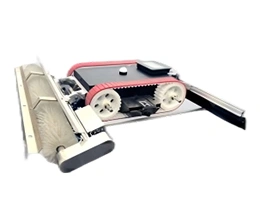
JIENENG manufactures a full range of industrial steam cleaners, pressure washers, tunnel washers, and solar panel cleaning robots. ATEX and EAC certified models available. 3-year warranty.
Request a Consultation