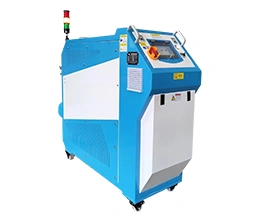
Explosion-Proof Steam Cleaners: ATEX Certification Explained
In environments where flammable gases, vapors, or dust are present, standard cleaning equipment can become an ignition source with catastrophic consequences. Explosion-proof steam cleaners are engineered to operate safely in these hazardous areas, but understanding the certification landscape — ATEX, EAC, zones, and equipment categories — is essential for compliant procurement.
What Is ATEX Certification?
ATEX is the European Union directive (2014/34/EU) governing equipment intended for use in potentially explosive atmospheres. The name derives from the French "ATmosphères EXplosibles." ATEX certification verifies that a machine's design prevents it from becoming an ignition source through:
- Spark-free construction (no contact surfaces that generate sparks)
- Temperature class limits (surface temperatures kept below auto-ignition thresholds of present gases)
- Explosion-proof enclosures (contain any internal ignition without propagating to the external atmosphere)
- Intrinsically safe electrical circuits (energy limited so arcs cannot ignite gas)
- Hermetic sealing of potential ignition sources
Only notified bodies — independent testing laboratories accredited by EU member states — can issue ATEX certificates after rigorous testing.
Hazardous Area Zone Classification
Hazardous areas are classified into zones based on the frequency and duration of explosive atmosphere presence. Equipment must match the zone classification where it will operate.
| Zone | Atmosphere | Frequency | Required Equipment Category |
|---|---|---|---|
| Zone 0 | Gas/vapor continuously present | Continuous or >1000 h/year | Category 1 (very high protection) |
| Zone 1 | Gas/vapor likely in normal operation | Occasionally (10–1000 h/year) | Category 2 (high protection) |
| Zone 2 | Gas/vapor not likely in normal operation | Rarely and briefly (<10 h/year) | Category 3 (normal protection) |
| Zone 20 | Dust continuously present | Continuous | Category 1D |
| Zone 21 | Dust likely in normal operation | Occasionally | Category 2D |
| Zone 22 | Dust not likely in normal operation | Rarely | Category 3D |
Most industrial explosion-proof steam cleaners are certified for Zone 1 and Zone 2 (gas) environments, covering the vast majority of chemical, oil and gas, and paint shop applications.
How Explosion-Proof Design Works
Explosion-proof construction in steam cleaners involves multiple engineering layers:
- Explosion-proof motor: The electric motor uses a flameproof enclosure (Ex d) that can withstand an internal explosion and prevent flame propagation outward. JIENENG uses 5.5 kW Ex d motors with ATEX certification.
- Intrinsically safe controls: All sensors, switches, and control circuits are designed so that even under fault conditions, the electrical energy is too low to create an igniting spark.
- Temperature classification: The maximum surface temperature of any accessible part is limited to T4 (135°C) or lower, ensuring it cannot ignite common industrial gases like propane, ethylene, or hydrogen.
- Static dissipation: All conductive parts are bonded and grounded to prevent static charge accumulation.
- Non-sparking materials: Contact surfaces, tools, and fittings use materials that do not generate sparks upon impact.
EAC Certification for Eurasian Markets
For markets in the Eurasian Customs Union (Russia, Belarus, Kazakhstan, Armenia, Kyrgyzstan), EAC certification under TR CU 012/2011 is the equivalent of ATEX. EAC certification follows similar principles:
- Mandatory for all equipment used in explosive atmospheres in EAEU member states
- Issued by accredited certification bodies in EAEU countries
- Requires factory production audit and type testing
- Recognized alongside ATEX for international procurement tenders
JIENENG explosion-proof steam cleaners carry both ATEX and EAC certifications, enabling compliant deployment in both EU and Eurasian markets without separate equipment purchases.
Key Specifications to Verify
| Specification | What to Check |
|---|---|
| Certification scope | Zones covered (Zone 1/2 gas, Zone 21/22 dust), gas groups (IIA, IIB, IIC) |
| Temperature class | T4 (135°C) is standard; T6 (85°C) for highly sensitive gases |
| Motor protection | Ex d flameproof enclosure with ATEX/EAC certificate number |
| Pressure rating | 0–20 MPa adjustable for JNX-EX20 class machines |
| Steam temperature | 160–220°C with thermostatic control |
| Control system | PLC with intrinsically safe interface, 10-inch touchscreen |
| Pump | Italian AR plunger pump, continuous-duty rated |
Common Procurement Mistakes
- Assuming CE covers ATEX: CE marking is a general safety declaration; ATEX is a specific explosive atmosphere directive with its own testing regime. They are not interchangeable.
- Ignoring dust zones: Many buyers focus on gas zones and overlook combustible dust hazards in grain, pharmaceutical, and metal powder facilities.
- Buying uncertified "explosion-proof" claims: Some manufacturers market machines as "explosion-proof" based on design features without actual certification. Always request the ATEX/EAC certificate with the notified body number.
- Mismatched temperature class: A T4-rated machine cannot be used where gases with auto-ignition below 135°C are present (e.g., carbon disulfide at 90°C).
- Overlooking installation requirements: Certified equipment must be installed per the manufacturer's ATEX instructions — improper cabling or grounding voids the certification.
Applications
Explosion-proof steam cleaners are deployed across industries where hazardous atmospheres are present:
- Oil and gas refineries and terminals
- Chemical and petrochemical plants
- Paint and coating facilities with solvent vapors
- Pharmaceutical manufacturing with combustible dust
- Grain handling and food processing with dust explosion risks
- Mining and mineral processing
- Defense and munitions facilities
Need an Explosion-Proof Steam Cleaner?
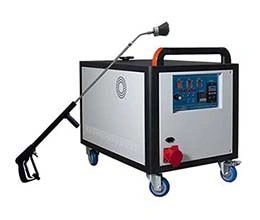
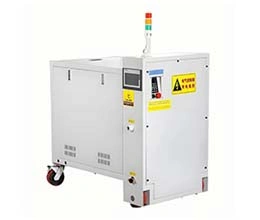
JIENENG's JNX-EX20 carries dual ATEX and EAC certification, covering Zone 1 and Zone 2 hazardous areas for both EU and Eurasian markets. Contact our team for specification sheets and certification documents.
Request SpecificationsSummary
Explosion-proof steam cleaners are essential safety equipment for any facility with classified hazardous areas. ATEX and EAC certifications provide verified assurance that the machine cannot become an ignition source. When procuring explosion-proof equipment, always verify the specific zone coverage, temperature class, gas group suitability, and that a notified body has issued the certificate — not just a manufacturer's claim. JIENENG's dual-certified JNX-EX20 simplifies procurement by covering both EU and Eurasian compliance requirements in a single machine.