Water conservation is no longer just an environmental initiative — it is a business necessity. Rising water costs, stricter discharge regulations, and sustainability targets are pushing manufacturers to find cleaning methods that use less water without compromising results. Industrial steam cleaning delivers up to 80% water savings compared to traditional washing methods.
The Science of Steam Efficiency
Saturated steam at 170-220°C carries tremendous thermal energy in a very small volume of water. When steam contacts a cold, oily surface, it transfers its heat energy instantly, softening and dissolving grease and oil. The condensed steam then rinses away the dissolved contaminants.
This means that 1 liter of water, converted to steam, can clean the same surface area that would require 5-10 liters of high-pressure water. The energy is in the heat, not the volume.
Water Usage Comparison
| Cleaning Method | Water Flow Rate | 8-Hour Shift Total | Cleaning Effectiveness |
|---|---|---|---|
| High-pressure water (cold) | 10-15 L/min | 4,800-7,200 L | Mechanical force only |
| High-pressure water (hot) | 10-15 L/min | 4,800-7,200 L | Force + heat |
| Steam cleaning | 0.03-0.08 L/min | 14-38 L | Heat + solvent action |
| Chemical soak tank | Batch (500-2000 L) | 500-2000 L | Chemical dissolution |
The difference is dramatic: steam cleaning uses less than 1% of the water consumed by pressure washing for comparable or superior cleaning results on oily and greasy surfaces.
Additional Benefits Beyond Water Savings
Reduced Wastewater Treatment Costs
Less water means less wastewater to treat. Industrial facilities spend significant money on wastewater treatment — settling tanks, oil separators, chemical treatment, and discharge fees. Reducing water volume by 80% proportionally reduces treatment costs.
Reduced Chemical Usage
Steam at 170-220°C dissolves oil, grease, wax, and many polymers without chemical solvents. For most industrial degreasing tasks, steam alone achieves cleanliness standards that would otherwise require alkaline cleaners, solvents, or detergents. This eliminates chemical purchase costs and chemical waste disposal.
Faster Drying
Because steam cleaning uses minimal water, surfaces dry quickly. There is no pooling water to wipe or blow off. This is critical for parts that must be immediately coated, painted, or assembled after cleaning. Faster drying also prevents flash rusting on bare metal surfaces.
Sanitization Without Chemicals
Steam above 120°C kills bacteria, mold, and biofilms through thermal denaturation. For food processing, pharmaceutical, and healthcare applications, steam provides chemical-free sanitization that meets HACCP and FDA requirements.
Industries That Benefit Most from Steam Cleaning
- Food and beverage: Zero chemical residue, sanitization, reduced wastewater
- Automotive manufacturing: Oil and grease removal, parts degreasing, paint preparation
- Steel and metalworking: Cutting oil removal, scale cleaning, surface preparation
- Mold and die shops: Mold release agent removal, waterway descaling
- Chemical and petrochemical: Explosion-proof steam cleaning for hazardous areas
- Railway maintenance: Locomotive part degreasing, oil contamination removal
Calculating Your Water Savings
To estimate potential water savings, calculate your current water consumption for cleaning:
- Multiply flow rate (L/min) by cleaning time (min) by shifts per day by working days per year
- Multiply the result by 0.8 (80% reduction) to estimate steam cleaning water use
- Multiply the difference by your water cost per liter (including treatment and discharge)
For a typical factory using 5,000 liters/day for cleaning at $0.05/liter (including treatment), switching to steam saves 4,000 liters/day = $200/day = $50,000/year in water costs alone.
Making the Switch
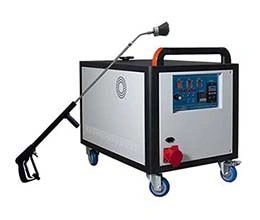
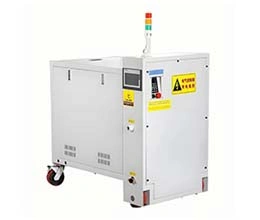
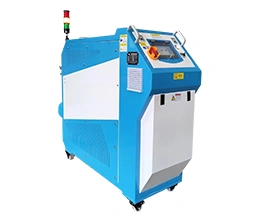
Transitioning from water-based to steam cleaning does not require replacing your entire cleaning infrastructure. JIENENG offers steam cleaners from 6kW to 48kW that can integrate with existing production lines. The ROI typically ranges from 6 to 18 months, driven by water savings, chemical elimination, and reduced wastewater treatment costs.
Need Help with Industrial Cleaning?
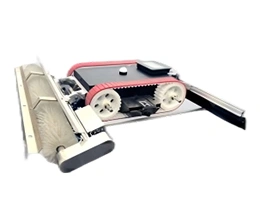
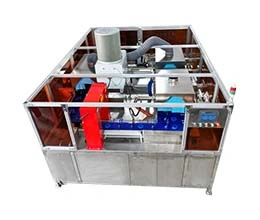
JIENENG manufactures a full range of industrial steam cleaners, pressure washers, tunnel washers, and solar panel cleaning robots. ATEX and EAC certified models available. 3-year warranty.
Request a Consultation