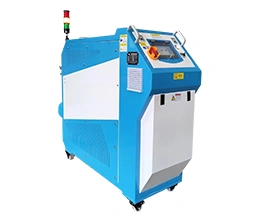
Industrial degreasing removes oils, greases, waxes, and other contaminants from manufactured parts before painting, plating, assembly, or inspection. The method you choose affects quality, cost, throughput, safety, and environmental compliance. This guide compares the five most common industrial degreasing techniques.
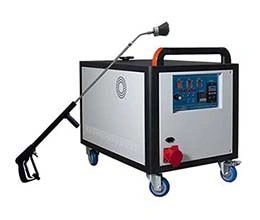
1. Steam Cleaning Degreasing
Process
High-temperature steam (170-220°C) at 5-20 bar pressure is directed at the workpiece. The thermal energy dissolves oils and greases, while steam pressure flushes away dissolved contaminants.
Best For
- Mineral oils, cutting fluids, machine oils
- Large parts and heavy equipment
- Continuous production (multi-gun systems)
- Explosion-proof environments (with ATEX-certified equipment)
Pros
Cons
Cost per Part: $0.50-3
2. Solvent Degreasing
Process
Parts are immersed in or sprayed with organic solvents (e.g., NMP, d-limonene, hydrocarbon solvents) that dissolve oils and greases through chemical action.
Best For
- Heavy tars, waxes, and synthetic lubricants
- Complex geometries (solvent reaches all surfaces)
- Parts requiring very low surface energy for bonding/coating
Pros
Cons
Cost per Part: $2-10
3. Aqueous Wash Degreasing
Process
Parts are washed in heated water with alkaline or acidic cleaning agents. Can be spray, immersion, or ultrasonic-assisted. Typically multi-stage: wash, rinse, dry.
Best For
- High-volume production with tunnel washers
- Parts with complex shapes requiring immersion
- Multi-stage cleaning specifications
Pros
Cons
Cost per Part: $1-5
4. Ultrasonic Cleaning
Process
Parts are immersed in a tank of cleaning solution (water + chemical or solvent) where ultrasonic transducers generate high-frequency cavitation bubbles that implode on the part surface, dislodging contaminants.
Best For
- Precision parts with blind holes, threads, and internal passages
- Delicate components that cannot withstand pressure or abrasion
- Electronic and optical components
Pros
Cons
Cost per Part: $5-15
5. Dry Ice Blasting
Process
Compressed air accelerates dry ice pellets at the workpiece. On impact, the pellets sublimate (turn to gas), lifting contaminants from the surface without leaving residue or moisture.
Best For
- Equipment cleaning without disassembly
- Electrical and electronic equipment (no moisture)
- Food industry equipment (no chemical residue)
- Historical restoration (non-abrasive)
Pros
Cons
Cost per Part: $3-8
Comprehensive Comparison Table
| Factor | Steam | Solvent | Aqueous | Ultrasonic | Dry Ice |
|---|---|---|---|---|---|
| Oil removal | Excellent | Excellent | Good | Fair | Fair |
| Grease removal | Excellent | Excellent | Good | Good | Fair |
| Internal passages | Fair | Good | Good | Excellent | Poor |
| Environmental impact | Very Low | High | Medium | Medium | Very Low |
| Cost/part | $0.50-3 | $2-10 | $1-5 | $5-15 | $3-8 |
| Throughput | High | Medium | Very High | Low | Medium |
| Chemical use | None | High | Medium | Medium | None |
| Equipment cost | $450-8,500 | $2,000-10,000 | $5,000-25,000 | $5,000-30,000 | $15,000-50,000 |
How to Choose
- Identify your contaminant: Oil and grease → steam; heavy tars → solvent; precision parts → ultrasonic; no-moisture → dry ice
- Calculate throughput needs: High volume → steam or aqueous tunnel washer; low volume → ultrasonic or single-station
- Check environmental constraints: Zero VOC required → steam or dry ice; wastewater limits → steam or dry ice
- Consider part characteristics: Heat-sensitive → avoid steam; water-sensitive → avoid aqueous; delicate → ultrasonic
- Compare 3-year total cost: Include equipment, chemicals, water, waste disposal, labor, and energy
For most general industrial degreasing applications, steam cleaning offers the best balance of effectiveness, cost, environmental impact, and throughput. JIENENG provides steam cleaners from 6kW to 48kW to match any degreasing requirement.
Need Help with Industrial Cleaning?
JIENENG manufactures a full range of industrial steam cleaners, pressure washers, tunnel washers, and solar panel cleaning robots. ATEX and EAC certified models available. 3-year warranty.
Request a Consultation