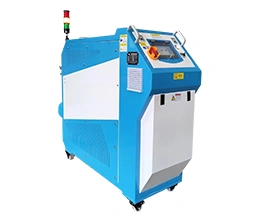
Industrial Degreasing Without Chemicals: Steam Cleaning for Oil & Grease Removal
Oil and grease contamination is one of the most persistent challenges in industrial manufacturing. Traditional degreasing relies heavily on chemical solvents — caustic alkaline baths, chlorinated degreasers, and petroleum-based solvents — that introduce cost, health, and environmental burdens. Industrial steam cleaning offers a proven alternative that dissolves grease using only high-temperature steam and moderate pressure, eliminating or drastically reducing chemical usage.
How Steam Dissolves Grease: Heat and Pressure
The physics of steam degreasing is straightforward. Grease and oil are hydrocarbon-based compounds with melting points typically between 30°C and 200°C. When dry steam at 170–220°C contacts a greasy surface, the heat transfers rapidly into the contaminant layer, lowering its viscosity to the point where it flows. The kinetic energy of pressurized steam (typically 6–20 bar) then dislodges the liquefied oil from the substrate, and the condensed water carries it away.
This mechanism is fundamentally different from chemical degreasing, which relies on saponification — the chemical reaction between an alkaline agent and fatty acids to form water-soluble soap. Steam cleaning achieves the same end result through thermal energy, without introducing any reactive chemistry into the process.
The Problem With Chemical Degreasing
Chemical degreasing has been the default for decades, but the hidden costs are significant:
| Problem Category | Chemical Degreasing Impact | Annual Cost Estimate (Mid-Size Facility) |
|---|---|---|
| Chemical purchase | Solvent consumption 500–2,000 L/year | $8,000–$15,000 |
| Waste disposal | Hazardous waste hauling & treatment | $3,000–$8,000 |
| Worker health | Dermal exposure, VOC inhalation, PPE costs | $2,000–$5,000 (medical + PPE) |
| Environmental compliance | Permitting, reporting, spill containment | $1,500–$4,000 |
| Equipment corrosion | Caustic damage to tanks, pumps, conveyors | $2,000–$6,000 |
Benefits of Chemical-Free Steam Degreasing
Cost Reduction
Steam cleaning eliminates the recurring purchase of cleaning chemicals and the associated hazardous waste disposal costs. The primary consumable is water and electricity, both of which are dramatically cheaper per cleaning cycle than solvent-based alternatives.
Cleaning Quality
Steam penetrates into crevices, blind holes, threaded fittings, and complex geometries that chemical baths and brushes cannot reach. The high temperature also kills bacteria and removes biofilms, making steam suitable for facilities that require both degreasing and sanitation.
Worker Safety
No chemical exposure means no VOC emissions, no skin burns from caustic agents, and no respiratory hazards. Operators work in a safer environment with minimal PPE requirements.
Regulatory Compliance
Eliminating chemicals removes the need for hazardous material storage permits, TRI reporting (in the US), VOC emission monitoring, and wastewater discharge permits for chemical contaminants.
Applications Where Steam Excels
- Engine and transmission components: Valve bodies, cylinder heads, gear sets, and crankshafts with baked-on oil
- Machinery maintenance: Conveyor chains, bearings, gearboxes, hydraulic cylinders, and machine tool ways
- Food processing equipment: Stainless steel conveyors, mixing tanks, cutting tables — degreasing and sanitizing in one pass
- Electrical equipment: Motors, switchgear housings, and control panels — dry steam leaves minimal moisture, safe for electrical components when powered down
- Molds and dies: Injection mold cavities, blow mold surfaces, and stamping dies with release-agent and oil residue buildup
When Chemicals Are Still Needed
Steam cleaning is not a universal replacement. Certain scenarios still require chemical assistance:
- Heavy carbonized deposits: Baked-on carbon at 300°C+ may need alkaline pretreatment before steam can penetrate
- Rust and scale removal: Mineral acids or chelating agents are more effective than steam alone for oxide layers
- High-volume continuous lines: Conveyorized spray washers with chemical baths may be faster for uniform small parts at very high throughput (500+ parts/hour)
- Paint stripping: Chemical strippers or media blasting remain more practical for full paint removal
In many facilities, the optimal approach is a hybrid: steam cleaning for routine degreasing and targeted chemical use only for specialized tasks.
Real-World Cost Comparison
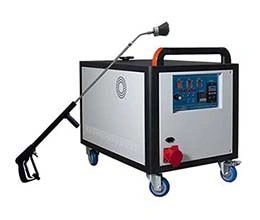
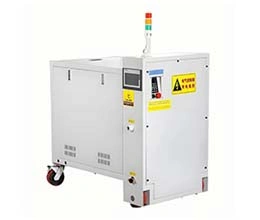
A mid-sized automotive parts manufacturer producing 50,000 components per month compared their existing chemical degreasing line with a JIENENG steam cleaning system over a 12-month period:
| Cost Factor | Chemical Degreasing (Annual) | Steam Cleaning (Annual) |
|---|---|---|
| Consumables (chemicals vs water/electricity) | $14,500 | $1,200 |
| Waste disposal | $6,800 | $0 (non-hazardous) |
| PPE & safety equipment | $3,200 | $800 |
| Equipment maintenance & corrosion repair | $4,000 | $1,000 |
| Compliance & permitting | $2,500 | $0 |
| Total Annual Cost | $31,000 | $3,000 |
| Annual Savings | — | $28,000 (90% reduction) |
The capital investment for the steam cleaning system was $18,500, yielding a payback period of approximately 8 months. After the first year, the facility saved $28,000 annually while also improving worker safety and eliminating hazardous waste streams entirely.
Ready to Eliminate Chemical Degreasing?
JIENENG steam cleaning systems deliver industrial-grade degreasing power without the cost, hazards, and compliance burden of chemical solvents. Contact our engineering team to discuss your specific application.
Request a ConsultationSummary
Industrial steam cleaning provides a technically sound and economically compelling alternative to chemical degreasing. By leveraging high-temperature steam (170–220°C) and moderate pressure (6–20 bar), facilities can dissolve and remove oil, grease, and contamination from complex components without introducing hazardous chemicals into their processes. The 90% cost reduction demonstrated in real-world comparisons, combined with eliminated waste disposal and improved worker safety, makes steam degreasing a strategic upgrade for any facility seeking to reduce operating costs while meeting increasingly stringent environmental and safety regulations.