Injection mold cleaning is critical for product quality, cycle time, and mold longevity. The choice between steam cleaning and chemical cleaning affects not only cleaning quality but also worker safety, environmental compliance, and operating costs. This comparison examines both methods across multiple dimensions.
Contamination Types in Injection Molding
Injection molds accumulate several types of contamination that require different cleaning approaches:
- Mold release agents: Waxy/oily residues that build up on cavity surfaces
- Plastic degradation products: Burned or gas-deposited material in vents and channels
- Waterway scale: Mineral deposits in cooling channels that reduce heat transfer
- Rust and corrosion: Surface oxidation from moisture and acidic gases
- Volatile gas deposits: Outgassing residues from plastic processing
Steam Cleaning for Molds
How It Works
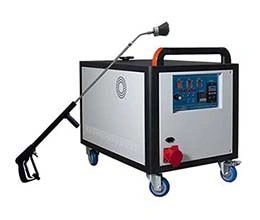
High-temperature steam (170-220°C) is directed at the mold surface through a nozzle at 5-20 bar pressure. The thermal energy dissolves release agents and plastic residues, while the steam pressure flushes away dissolved contaminants. For waterway cleaning, high-pressure pulse technology combined with steam descales internal channels.
Advantages
- No chemical solvents needed — zero chemical purchase and disposal costs
- Cleans and sanitizes in one step
- Minimal water usage (80% less than water-based methods)
- No drying time required — surfaces dry quickly due to thermal evaporation
- Safe for hardened steel, polished surfaces, and precision tolerances
- Effective for internal waterway descaling with pulse technology
- No environmental discharge issues
Limitations
- Not suitable for electronic components or sensors (must be removed first)
- Requires steam generator equipment
- Limited effectiveness on extremely heavy carbon buildup (may need pre-soaking)
- Operator must wear heat-resistant gloves and eye protection
Chemical Cleaning for Molds
How It Works
Molds are soaked in or sprayed with chemical solvents: alkaline cleaners, acid descalers, or specialized mold cleaning compounds. Chemicals dissolve contaminants through chemical reactions, then parts are rinsed with water and dried.
Advantages
- Effective on heavy carbon buildup and severe contamination
- Can clean internal channels by circulating solution
- Familiar process for most mold shops
- Lower equipment cost (tanks and pumps)
Limitations
- Chemical purchase and disposal costs ($2,000-10,000/year)
- Environmental compliance requirements for chemical waste
- Worker health risks from solvent exposure
- Long process time (soak 2-8 hours + rinse + dry)
- Risk of chemical damage to mold surfaces (acid etching, corrosion)
- Residual chemical film may affect subsequent molding
- Large volumes of contaminated wastewater to treat
Cost Comparison (Per Mold)
| Cost Factor | Steam Cleaning | Chemical Cleaning |
|---|---|---|
| Process time | 30-60 min | 2-8 hours |
| Labor cost | $25-50 | $50-150 |
| Chemicals | $0 | $5-30 |
| Water | $0.50 (minimal) | $5-15 (rinse + dilute) |
| Waste disposal | $0 | $5-20 |
| Energy (electricity) | $1-3 | $0.50-1 (heating) |
| Total per mold | $26-53 | $65-216 |
For a mold shop cleaning 200 molds per year, steam cleaning saves $7,800-32,600 annually.
Mold Waterway Cleaning: A Special Case
Cooling channel (waterway) descaling is one of the most critical and challenging mold maintenance tasks. Scale buildup in cooling channels reduces heat transfer, increases cycle time, and causes uneven cooling that warps parts.
Chemical Descaling
Acid solutions are circulated through the waterways to dissolve calcium and mineral scale. Effectiveness depends on acid strength, circulation time, and temperature. Risk: acid can damage mold components if not properly neutralized.
Steam + Pulse Cleaning
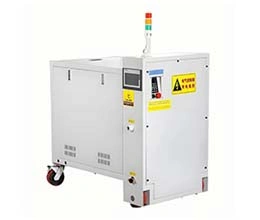
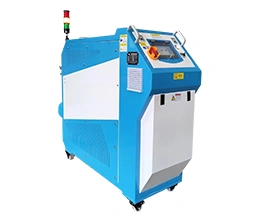
High-pressure steam pulses combined with specialized nozzles physically break and flush scale from waterway walls. No chemicals needed. The JIENENG JNX-D3AK uses this technology for effective, chemical-free waterway descaling. Risk: pressure must be controlled to avoid damage to thin-channel walls.
Environmental and Safety Comparison
| Factor | Steam Cleaning | Chemical Cleaning |
|---|---|---|
| Chemical exposure risk | None | High (solvents, acids, alkalines) |
| VOC emissions | Zero | Significant (solvent-based cleaners) |
| Wastewater volume | Minimal | Large (contaminated rinse water) |
| Waste disposal | None | Regulated chemical waste |
| PPE required | Heat gloves, safety glasses | Chemical gloves, respirator, apron, goggles |
| Environmental permits | None | May require discharge permits |
Recommendation
For most injection mold maintenance applications, steam cleaning offers superior results at lower cost with minimal environmental impact. Chemical cleaning remains relevant for:
- Extremely heavy carbon buildup that steam alone cannot handle
- Complex internal geometries where steam cannot reach
- Facilities without access to steam cleaning equipment
The best approach is often a hybrid: steam cleaning for routine maintenance (90% of cleaning tasks) and chemical cleaning for occasional deep cleaning. The JIENENG JNX-D3AK mold waterway cleaning machine provides steam + pulse cleaning for both surface and internal channel maintenance.
Need Help with Industrial Cleaning?
JIENENG manufactures a full range of industrial steam cleaners, pressure washers, tunnel washers, and solar panel cleaning robots. ATEX and EAC certified models available. 3-year warranty.
Request a Consultation