Solar Panel Cleaning Methods Compared: Robots vs Manual vs Waterless
Solar panel soiling — the accumulation of dust, pollen, bird droppings, and atmospheric pollution on photovoltaic modules — reduces energy output by 5–30% depending on location, climate, and panel orientation. In arid regions with minimal rainfall, soiling losses can exceed 40%, making regular cleaning an economic necessity rather than a maintenance preference. The question for solar plant operators is not whether to clean, but which method delivers the best return on investment. This guide compares the four primary cleaning methods used in utility-scale and commercial solar installations today.
Method 1: Robotic Cleaning Systems
Robotic cleaning systems are autonomous or semi-autonomous devices that travel along the panel rows, cleaning with rotating brushes, microfiber rolls, or air jets. They represent the fastest-growing segment in solar O&M (operations and maintenance), particularly for utility-scale plants exceeding 10 MW.
Types of Robotic Cleaners
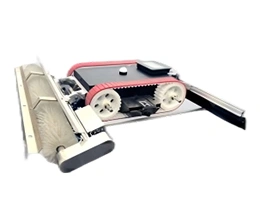
- Crawler-type (tracked) robots: Move along panel surfaces using rubber tracks or crawler mechanisms. Equipped with rotating cylindrical brushes that sweep dust off the glass. Best for fixed-tilt and tracker installations with uniform row configurations. JIENENG's JNX-L is a tracked robot designed for large-scale PV plants.
- Rail-guided robots: Run on permanent rails installed along panel rows. More expensive to deploy but offer precise positioning and can operate on steep-tilt installations. Common in desert utility-scale plants.
- Roller robots: Use a microfiber-covered roller that rolls across the panel surface, picking up fine dust. Some models use electrostatic attraction for dry cleaning without water.
Advantages
- Automated scheduling — can clean at night when panels are not generating
- Consistent cleaning quality across thousands of panels
- Low labor cost per MW once deployed
- Can operate in water-scarce regions (dry brush models use zero water)
- Data logging of cleaning coverage for O&M reporting
Limitations
- High initial capital investment ($15,000–$50,000+ per unit)
- Requires compatible panel row geometry — uneven or fragmented arrays are challenging
- Maintenance of the robot itself (brushes, motors, batteries, tracks)
- Not suitable for rooftop residential installations
Method 2: Manual Washing
Manual cleaning involves workers using brushes, squeegees, and pressure washers to clean panels by hand. This is the traditional approach and remains common for small-to-medium installations and for areas where labor costs are low.
How It Works
Workers use soft-bristle brushes on extension poles, deionized water-fed systems, or low-pressure washers to physically scrub panel surfaces. Cleaning is typically performed early morning or evening when panels are cool to avoid thermal shock from cold water on hot glass.
Advantages
- Low equipment cost — basic brushes and water supply
- Flexible — can clean any panel configuration including rooftops and irregular layouts
- No upfront capital investment
- Workers can inspect panels for damage during cleaning
Limitations
- Labor-intensive and expensive at scale ($0.50–$3.00 per panel per cleaning)
- Inconsistent quality depending on worker skill and supervision
- Safety risks for workers on rooftops and large ground-mount arrays
- Slow — a 4-person crew cleans approximately 500–1,000 panels per day
- Water consumption of 0.5–2 liters per panel per cleaning
- Difficult to schedule frequently for large plants
Method 3: Waterless Dry Cleaning
Waterless cleaning uses no water at all, relying on mechanical or electrostatic methods to remove dry dust from panel surfaces. This approach is essential in desert regions where water is scarce and where wet cleaning can leave mineral deposits on panels.
How It Works
- Dry brush systems: Soft polymer or natural fiber brushes sweep dust off the panel surface. The brush material is selected to avoid scratching anti-reflective coatings on panel glass.
- Electrostatic systems: An electrostatic charge attracts dust particles away from the panel surface. Experimental and emerging technology, limited commercial deployment.
- Air jet systems: Compressed air blows dust off panel surfaces. Effective for light, dry dust but ineffective for sticky or organic contamination.
Advantages
- Zero water consumption — critical for desert and water-stressed regions
- No mineral deposit risk (no hard water spotting)
- Can be deployed as robotic automated systems
- Fast — dry brushing can cover large areas quickly
Limitations
- Ineffective on wet, sticky, or organic contamination (bird droppings, pollen mixed with dew)
- May not remove embedded grime that has bonded to the glass over months
- Requires periodic wet cleaning as a supplementary measure
- Brush wear is higher than wet cleaning (dry friction increases material wear)
Method 4: Drone Spraying
Agricultural drones adapted for solar cleaning spray deionized water or cleaning solution onto panel arrays from above. This is an emerging method with growing adoption for large utility-scale plants.
How It Works
Multirotor drones carry 10–30 liter water tanks and spray nozzles. They fly programmed grid patterns over solar arrays, spraying a fine mist of deionized water that loosens dust. Some systems incorporate soft brush attachments that contact the panel surface while the drone hovers.
Advantages
- Rapid coverage — a drone can clean 5–10 MW per day depending on tank capacity and flight time
- No physical contact with panels — eliminates scratch risk from brushes
- Can access difficult terrain (slopes, marshy ground, arrays over water)
- Minimal ground infrastructure required
Limitations
- High equipment cost ($5,000–$20,000 for commercial-grade drones)
- Limited payload — frequent refilling required for large arrays
- Weather dependent — cannot fly in high winds or rain
- Regulatory restrictions on drone flight in many jurisdictions
- Spray-only cleaning may not remove stubborn contamination without brush contact
- Requires licensed drone operators
Comprehensive Comparison
| Factor | Robotic | Manual | Waterless (Dry) | Drone |
|---|---|---|---|---|
| Initial investment | $15K–$50K+ | $500–$2K | $10K–$30K | $5K–$20K |
| Cost per panel/cleaning | $0.05–$0.20 | $0.50–$3.00 | $0.05–$0.15 | $0.15–$0.50 |
| Water usage | 0–0.5 L/panel | 0.5–2 L/panel | 0 L/panel | 0.1–0.5 L/panel |
| Cleaning speed (panels/day) | 5,000–15,000 | 500–1,000 | 3,000–10,000 | 2,000–8,000 |
| Cleaning quality | Consistent | Variable | Good (dry dust) | Moderate |
| Worker safety risk | Low | High | Low | Low |
| Best for | Utility-scale (10MW+) | Small/medium, rooftops | Desert, water-scarce | Large arrays, difficult terrain |
Decision Matrix by Installation Type
| Installation Type | Recommended Method | Rationale |
|---|---|---|
| Utility-scale ground mount (50MW+) | Robotic (primary) + occasional manual | Scale justifies robotic investment; manual for spot cleaning stubborn deposits |
| Commercial rooftop (100kW–5MW) | Manual or drone | Robotic deployment impractical on rooftops; drones avoid worker safety risks |
| Residential rooftop (<100kW) | Manual | Small scale does not justify automated equipment |
| Desert utility-scale | Waterless robotic + seasonal wet | Water scarcity dictates dry cleaning; periodic wet cleaning for bonded contamination |
| Floating solar | Drone | Panel access is over water; ground-based methods are impractical |
| Agrivoltaic (panels over crops) | Robotic or drone | Ground access limited by crops; drone avoids crop damage |
Cleaning Frequency Recommendations
Optimal cleaning frequency depends on soiling rate, which varies by climate and environment:
| Environment | Soiling Rate | Recommended Frequency | Output Loss If Uncleaned |
|---|---|---|---|
| Arid desert (low rainfall) | High | Every 1–2 weeks | 25–40% annually |
| Semi-arid (seasonal rain) | Medium-High | Every 2–4 weeks | 15–25% annually |
| Temperate (regular rain) | Low-Medium | Every 1–3 months | 5–15% annually |
| Tropical (heavy rain) | Low | Every 3–6 months | 3–8% annually |
| Industrial/polluted | Medium-High | Every 2–4 weeks | 15–30% annually |
| Coastal (salt spray) | Medium | Every 1–2 months | 10–20% annually |
The economics are clear: if cleaning restores even 5% of output, and the plant generates $50,000/MW/year, then each MW cleaned generates $2,500/year in recovered revenue — far exceeding cleaning costs in most scenarios.
Looking for a Solar Panel Cleaning Solution?
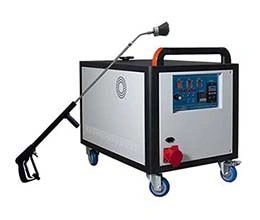
JIENENG manufactures the JNX-L tracked solar panel cleaning robot for utility-scale PV plants, plus steam and pressure cleaning systems for manual and hybrid approaches. Contact us to discuss your installation requirements.
Discuss Your ProjectSummary
No single cleaning method is optimal for all solar installations. Robotic systems deliver the lowest cost per panel for utility-scale plants (10MW+) with uniform row geometry, at $0.05–$0.20 per panel per cleaning. Manual washing remains practical for small installations and rooftops where automation is impractical. Waterless dry cleaning is essential in water-scarce desert regions but requires periodic wet cleaning supplementation. Drone spraying offers rapid coverage and access to difficult terrain but carries regulatory and payload limitations. The decision should be driven by plant size, location, water availability, and soiling characteristics. With soiling losses of 5–40% representing significant revenue impact, establishing an optimized cleaning schedule — and selecting the right method to execute it — is one of the highest-ROI O&M decisions a solar plant operator can make.