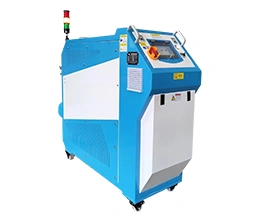
Dust, pollen, bird droppings, and industrial pollution accumulate on solar panels, reducing energy output by 15-25% or more. Traditional manual cleaning is labor-intensive, dangerous for rooftop installations, and inconsistent. Solar panel cleaning robots solve these problems with automated, scheduled, and safe cleaning. This guide covers robot types, ROI calculation, and implementation best practices.
Types of Solar Panel Cleaning Robots
1. Crawler-Type Cleaning Robots
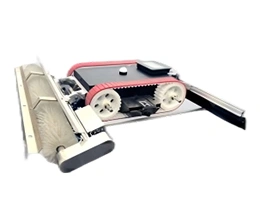
Crawler-type robots (like the JIENENG JNX-L) travel across the solar panel surface on soft tracks or wheels. They combine steam or water spray with rotating brushes for thorough cleaning. These robots are self-propelled and can cover large arrays autonomously.
- Best for: Large ground-mounted solar farms
- Coverage: Up to 1,000+ panels per day
- Power: Battery-powered, 4-8 hour runtime
- Key advantage: Fully autonomous operation
2. Fully Automatic Cleaning Robots
Automatic robots are permanently installed on solar panel rows and operate on scheduled cycles. They traverse the panel row, clean, and return to the charging station automatically.
- Best for: Rooftop installations, fixed solar arrays
- Coverage: Single row per robot, multiple robots for large arrays
- Power: Solar-charged battery
- Key advantage: Zero labor after installation
3. Semi-Automatic Cleaning Systems
Semi-automatic systems provide mechanical assistance but require an operator. Typically a motorized brush on a pole or a guided cart that the operator pushes along the panel row.
- Best for: Small installations, irregular panel layouts
- Coverage: 200-500 panels per day
- Power: Battery or corded
- Key advantage: Lowest cost, most flexible
4. Electric Brush Systems
Manual electric brushes for small-scale or spot cleaning. The operator manually cleans each panel.
- Best for: Residential, small commercial, spot cleaning
- Coverage: 50-100 panels per day
- Power: Battery
- Key advantage: Very low cost, portable
Calculating ROI of Solar Panel Cleaning Robots
Energy Recovery
Dirty panels lose 15-25% efficiency. For a 1MW solar farm generating $100,000/year in revenue, that is $15,000-25,000 in lost income.
| System Size | Daily Revenue Loss (Dirty) | Annual Loss | Robot Cost | Payback Period |
|---|---|---|---|---|
| 100kW | $5-8/day | $1,500-2,500 | $5,000-8,000 | 3-5 years |
| 500kW | $25-40/day | $7,500-12,000 | $8,000-12,000 | 1-1.5 years |
| 1MW | $50-80/day | $15,000-25,000 | $12,000-15,000 | 7-12 months |
| 5MW | $250-400/day | $75,000-120,000 | $50,000-75,000 | 6-10 months |
Labor Savings
Manual cleaning of a 1MW solar farm requires 4-6 workers for 2-3 days, costing $2,000-4,000 per cleaning cycle. With monthly cleaning, annual labor cost is $24,000-48,000. A robot eliminates 80-100% of this labor cost.
Water Savings
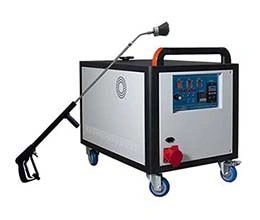
Steam-cleaning robots use 80% less water than manual washing. In water-scarce regions, this eliminates the need to truck in water, saving $5,000-15,000/year for large installations.
Best Practices for Solar Panel Cleaning
Cleaning Frequency
| Environment | Recommended Frequency | Energy Loss if Not Cleaned |
|---|---|---|
| Arid/desert | Every 2-4 weeks | 25-35% |
| Industrial area | Every 1-2 months | 15-25% |
| Agricultural area | Every 2-3 months | 10-15% |
| Urban area | Every 3 months | 8-12% |
| Heavy rainfall area | Every 4-6 months | 5-8% |
Cleaning Method Selection
- Steam cleaning: Best for oily contamination, bird droppings, industrial pollution. Uses minimal water, sanitizes surface.
- Brush + water spray: Best for dust and dry soil. Higher water usage but faster coverage.
- Dry brushing: Best for light dust in water-scarce areas. No water needed but less effective for sticky contamination.
Safety Considerations
- Never clean panels during peak production hours — electrical hazard
- Use robots with soft brushes designed for tempered glass
- Avoid high pressure (>50 bar) that can damage panel seals
- Ensure robot weight does not exceed panel load rating (typically 2400Pa)
- Use explosion-proof robots near volatile gas sources
Choosing the Right System
- Calculate your energy loss from soiling (compare clean vs dirty output)
- Determine panel layout: ground-mounted, rooftop, fixed, or tracking
- Assess water availability and cost
- Evaluate labor availability and cost in your region
- Consider climate: snow, ice, extreme heat affect robot operation
- Plan for maintenance: brush replacement, battery service, sensor calibration
JIENENG offers the full range from manual electric brushes to fully autonomous crawler-type robots (JNX-L). Contact us for a site-specific recommendation and ROI calculation.
Need Help with Industrial Cleaning?
JIENENG manufactures a full range of industrial steam cleaners, pressure washers, tunnel washers, and solar panel cleaning robots. ATEX and EAC certified models available. 3-year warranty.
Request a Consultation