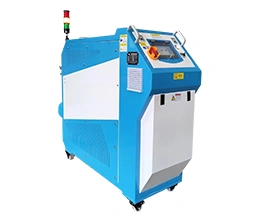
Choosing between a tunnel (conveyor) washing system and a single-station cleaning machine is one of the most important equipment decisions for industrial parts manufacturers. The wrong choice means either wasted capacity (tunnel too large for your volume) or production bottlenecks (single-station too slow for your throughput). This comparison helps you make the right decision.
What Is a Tunnel Washer?
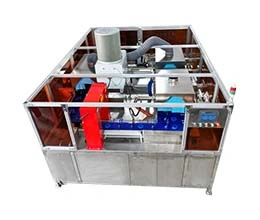
A tunnel washer (also called a conveyor washing machine or in-line washer) is a continuous-feed cleaning system. Parts are placed on a conveyor belt or fixture, travel through a tunnel-shaped washing chamber, and emerge clean and dry at the other end. Multiple cleaning stages — pre-wash, main wash, rinse, rust prevention, water displacement, and drying — can be integrated in a single pass.
What Is a Single-Station Cleaning Machine?
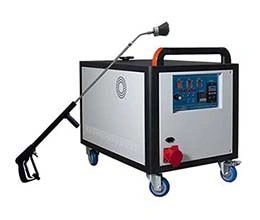
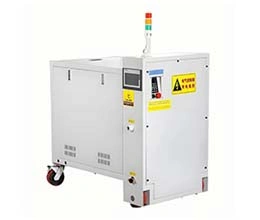
A single-station machine cleans one part or one batch at a time in a fixed position. The operator loads the part, starts the cycle, waits for completion, and unloads. Steam cleaners, pressure washers, and ultrasonic tanks are all single-station systems.
Head-to-Head Comparison
| Factor | Tunnel Washer | Single-Station |
|---|---|---|
| Throughput | 200-2,000+ parts/hour | 5-50 parts/hour |
| Automation level | Fully automatic (load and unload only) | Semi-automatic (operator load/unload per cycle) |
| Initial cost | $20,000-25,000+ | $450-7,500 |
| Labor per 1,000 parts | 0.5-1 hour | 20-200 hours |
| Footprint | Large (10-30 meters length) | Compact (1-3 square meters) |
| Part size range | Medium, consistent shapes | Any size, any shape |
| Cleaning stages | Multi-stage (wash/rinse/dry in one pass) | Single stage per cycle |
| Changeover time | 10 minutes (quick-change tooling) | Instant (manual repositioning) |
| Best for | High-volume, standardized parts | Low-volume, large, or complex parts |
When to Choose a Tunnel Washer
You Need High Throughput
If your production line outputs more than 100-200 parts per hour that need cleaning, a single-station machine cannot keep up. A tunnel washer processes parts continuously, matching line speed.
You Need Multi-Stage Cleaning
If your cleaning specification requires wash, rinse, passivation, and drying, a tunnel washer integrates all stages in one pass. With a single-station machine, each stage is a separate cycle with manual transfer between tanks.
You Want to Reduce Labor
A tunnel washer requires one operator to load and one to unload, regardless of throughput. Single-station machines require one operator per machine per cycle. For high-volume production, the labor savings alone justify the tunnel washer investment.
Your Parts Are Consistent in Size
Tunnel washers work best when parts are similar in size and shape, suitable for conveyor transport. With quick-change tooling, different part families can be accommodated, but extreme size variation requires different fixtures.
Common Tunnel Washer Applications
- Gear manufacturing: Continuous gear cleaning after machining
- Motor shaft production: In-line shaft degreasing
- Automotive parts: Cylinder, crankshaft, valve cleaning
- Crate and tray washing: Logistics container cleaning
- Bearing manufacturing: Bearing race and roller cleaning
When to Choose a Single-Station Machine
You Have Low or Variable Volume
If you clean fewer than 50 parts per hour, or if cleaning demand is irregular, a single-station machine is more cost-effective. You only run it when needed, with no idle tunnel to maintain.
Your Parts Are Large or Complex
Large castings, engine blocks, ship parts, and irregularly shaped workpieces may not fit on a standard conveyor. Single-station steam cleaners handle any size that fits in the cleaning bay.
You Need Specialized Cleaning
For parts requiring special attention — stubborn contamination, delicate surfaces, or internal passages — a single-station machine with manual oversight provides better quality control.
You Have Space Constraints
Tunnel washers require significant floor space (10-30 meters in length). Single-station machines fit in 1-3 square meters, making them suitable for small workshops or mobile cleaning needs.
Cost Analysis Example
Consider a factory cleaning 500 gears per day:
| Option | Equipment Cost | Daily Labor Cost | Annual Total (1 shift) |
|---|---|---|---|
| 3 single-station machines | $8,400 (3 x $2,800) | $600 (3 operators) | $158,400 |
| 1 tunnel washer | $22,000 | $200 (1 operator) | $72,000 |
| Savings | -$13,600 (higher upfront) | $400/day | $86,400/year |
The tunnel washer pays back the higher investment in less than 2 months and saves $86,000+ per year in labor costs.
Hybrid Approach
Many manufacturers use both: a tunnel washer for high-volume standard parts and a single-station steam cleaner for prototypes, large parts, or deep-cleaning tasks. This provides the best of both systems.
Decision Matrix
- Calculate your required throughput (parts/hour)
- List your part sizes and weight range
- Determine cleaning stages needed (wash only vs wash+rinse+dry)
- Calculate available floor space
- Compare 3-year total cost: equipment + labor + utilities + maintenance
- Factor in future growth: will volume increase?
JIENENG manufactures both tunnel washers (for gears, motor shafts, crates, trays) and single-station steam cleaners (6-48kW). Contact us for a customized recommendation based on your specific parts and throughput requirements.
Need Help with Industrial Cleaning?
JIENENG manufactures a full range of industrial steam cleaners, pressure washers, tunnel washers, and solar panel cleaning robots. ATEX and EAC certified models available. 3-year warranty.
Request a Consultation